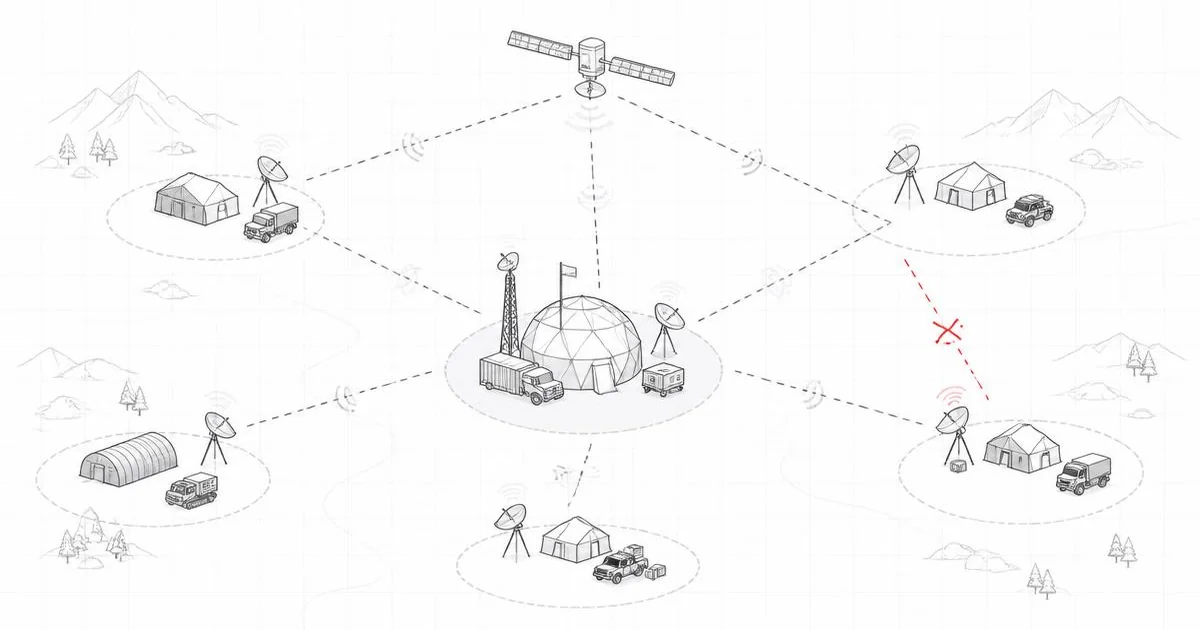
A field office can be secure at nine in the morning and exposed by noon. Staff may move between hotels, temporary offices, clinics, community centers, shared workspaces, and mobile networks. Devices may operate for days without reliable connectivity. Local partners may require temporary access during a crisis.
Static security rules handle this environment poorly. Blocking every unfamiliar connection may prevent staff from delivering essential services. Trusting every successful login may expose sensitive records to stolen credentials, compromised devices, or unsafe networks.
The better approach is continuous evaluation. A login should be considered alongside device condition, authentication strength, location, network type, requested resource, privilege level, recent behavior, and the consequences of a mistake.
ArtOfTheHack can apply KRYOS-XS Hypercube as a decision layer above the organization’s identity, endpoint, cloud, and data systems. A field worker using a known device on a new network may be allowed to continue with a shorter session. Access to sensitive files may require stronger authentication. Bulk downloads may be restricted until the device returns to a trusted environment.
The system should also recognize that geographic anomalies are not always suspicious. Humanitarian workers travel. Teams cross borders. Internet traffic may be routed through regional providers. A useful security decision must distinguish mobility from compromise rather than treating movement itself as evidence of wrongdoing.
Native fallback remains essential. If the decision layer is unavailable, existing tools continue operating under their established controls. Field operations should never depend on a single external service remaining online.
Security for humanitarian work is therefore a problem of disciplined adaptation. The organization must respond to changing conditions without turning every unusual circumstance into a crisis. A contextual, human-governed model supports that balance.